
Loading…
Loading…
 Photo: Photo by Pavithrah via Wikimedia Commons (CC BY-SA 3.0)
It began as a mud fort in 1537. After the British breached it in 1791, only a gate and a small Ganesha shrine were left.
The remains of Bengaluru's original mud fort, built by the city's founder Kempe Gowda I in 1537 and later rebuilt in stone by Hyder Ali and expanded by Tipu Sultan in the late 18th century. The British breached and largely demolished the fort after defeating Tipu Sultan in the Siege of Bangalore in 1791, leaving only fragments including the Delhi Gate and a small Ganesha shrine. What survives sits incongruously amid the dense commercial district of K.R. Market today. It remains one of the few physical traces of pre-colonial Bengaluru.
| Mon-Sun | 8 AM - 5 PM |
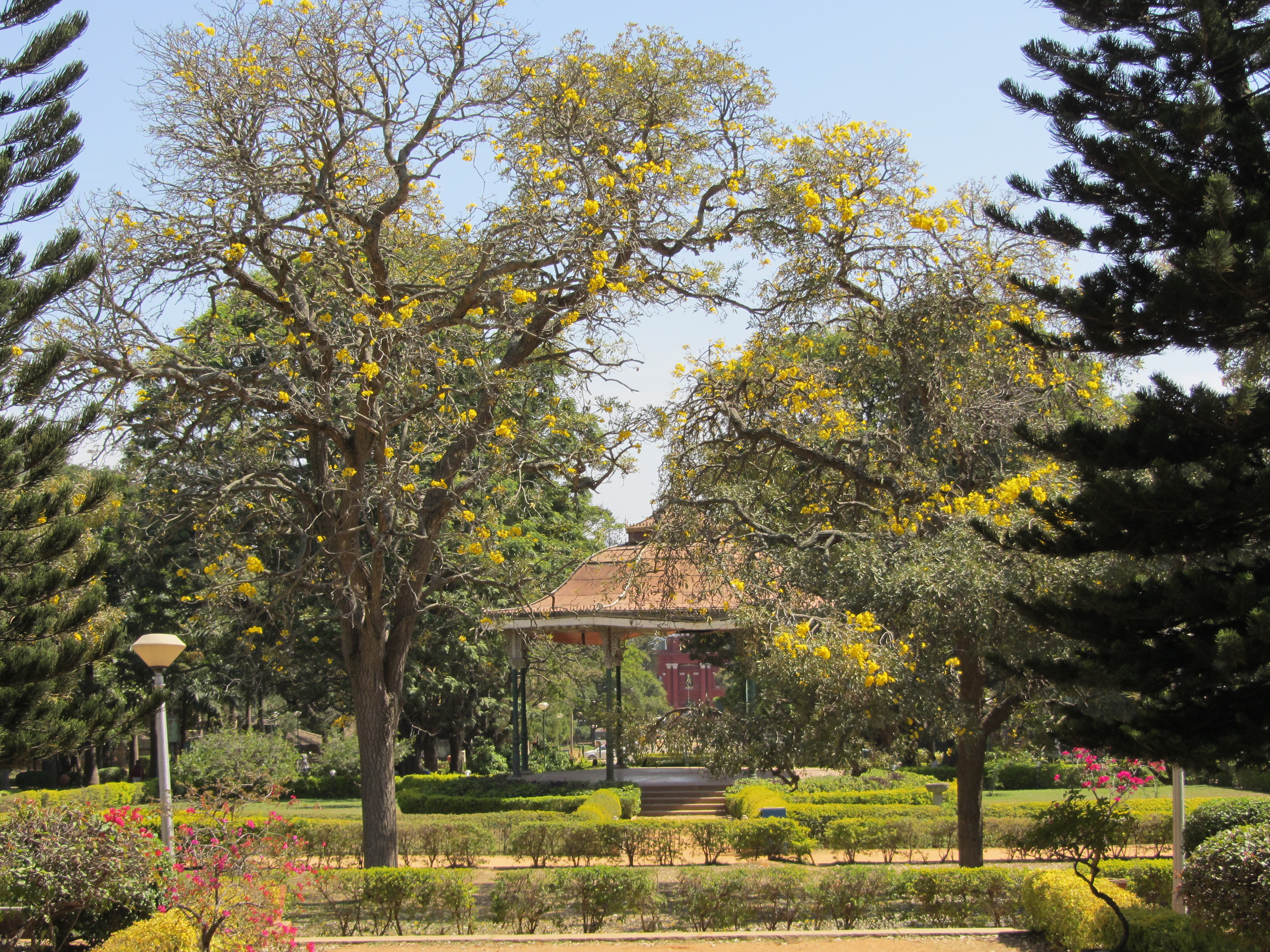
Laid out in 1870, Bengaluru's green lung is shaded by century-old rain trees.

Where a jail once held freedom fighters, a park now stands, keeping a section of the old wall and a watchtower.

Tipu Sultan's teakwood retreat, its pillars painted with flowers that blend Hindu and Islamic traditions.